
Every major shock of the last five years has taught us the same lesson, and sadly, in the ASEAN region, we keep half-learning it.
COVID closed borders overnight. The Strait of Hormuz crisis disrupted fuel and freight across the ocean and has the potential to get worse. Typhoons, floods, and heatwaves are impacting crops and yields across Southeast Asia with increasing regularity, with climate modelling projecting that cropland area across Indonesia, Malaysia, the Philippines, and Viet Nam could decline by more than 10 per cent by 2028 if no corrective action is taken.[1]
Each time, the question isn’t which food category or system is most virtuous, but it’s which foods reach people when the supply chain breaks.
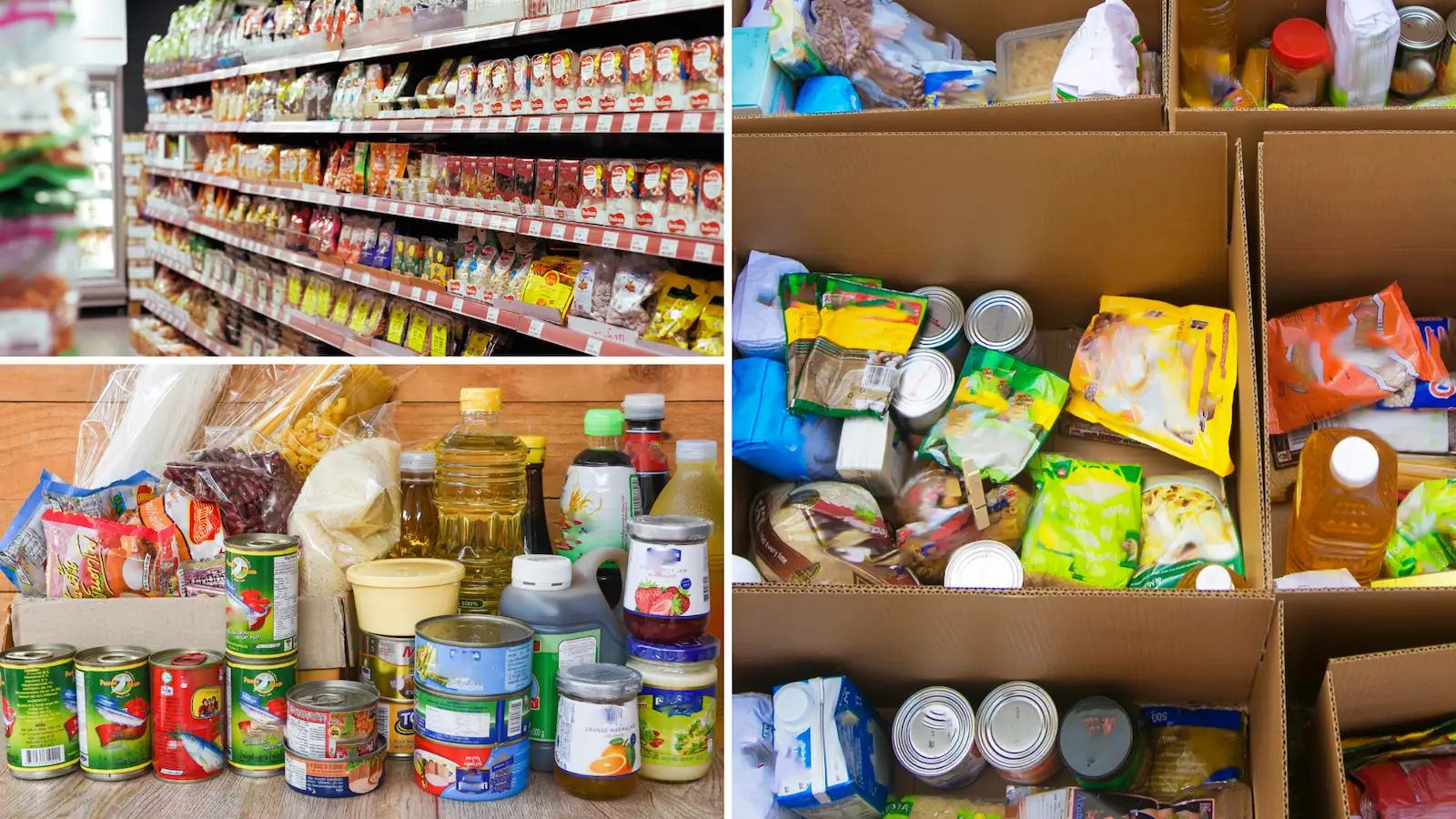
The consistent answer is packaged, shelf-stable foods across ASEAN. These range from dried pulses and cereals, canned fish, meat, and legumes through to UHT dairy, powdered milk, early-life nutrition, cooking oils, instant noodles, and fortified porridges, to name but a few.
The nutritional range of this category is also worth stating plainly since canned fish delivers high-quality protein and omega-3s. Meanwhile, powdered milk provides calcium, fat, and micronutrients that are critical for children and the elderly. Finally, fortified cereals and porridges are specifically designed to address micronutrient gaps in populations under stress. But in acute emergencies, especially where access to safe water, fuel, and basic utensils is severely constrained, the immediate priority should be ready-to-eat packaged food that can be consumed safely and quickly. In those settings, products such as canned fish, UHT dairy, fortified biscuits, nutrient-dense bars and foods that do not require reconstitution or cooking are often the more practical frontline option.
This is critical infrastructure since its shelf life is measured in months, not days. These are the foods governments draw on when distribution collapses, what households fall back on when fresh supply disappears, and what humanitarian agencies move at scale when logistics are constrained.
This category does not get the credit it deserves in food policy discussions, but that’s starting to change.
ASEAN is developing a regional framework for the availability and rapid deployment of ready-to-eat packaged food during emergencies, building on ASEAN Plus Three Emergency Rice Reserve (APTERR) and explicitly addressing non-rice food needs for the first time.
The ASEAN Food, Agriculture and Forestry Sectoral Plan (FAF-SP) 2026–2030 includes a direct mandate for this, and ASEAN Agriculture Ministers have formally endorsed mechanisms for distributing ready-to-eat packaged food during crises.[2] At the 48th ASEAN Summit in May 2026, leaders formally linked maritime disruption to food supply stability and called for stronger regional coordination to maintain the flow of essential goods, including food. [3]
That’s a meaningful change and an acknowledgement that a household with access to rice alone is not food-secure, and that the regional preparedness architecture needs to reflect the full nutritional picture.
But policy frameworks don’t work without the production base behind them. Manufacturers who invest in aseptic processing, modified-atmosphere packaging, extended shelf-life formulations, and cold-chain-independent formats are making a direct contribution to national resilience. The ability to pre-position food stocks ahead of a crisis, maintain strategic reserves, and move product rapidly through disrupted logistics networks depends entirely on those capabilities existing in the first place. That is a public good produced by private investment, and it needs to be treated as such.
The food industry needs to make this case more assertively. Not as a commercial argument, but as a policy one. Shelf-stable foods are not a concession to convenience, which is what much of the public discourse focuses on.
If the next shock looks geopolitical, climatic, logistical, or something we didn’t see coming, we know shelf-stable foods are what keep vulnerable people fed across the region.
—
Sources
[1] Zhao et al., Case Study on Climate Change Effects and Food Security in Southeast Asia, Scientific Reports / Nature, July 2024. nature.com
[2] ASEAN Secretariat, ASEAN Food, Agriculture and Forestry Sectoral Plan 2026–2030 (FAF-SP 2026–2030), February 2026; IndexBox, ASEAN Agriculture Ministers Strengthen Food Security Amid Geopolitical Tensions, May 2026.
[3] ASEAN Leaders Focus on Food, Energy, Maritime Safety — Joint Statement of the 48th ASEAN Summit, The Manila Times, May 10, 2026.